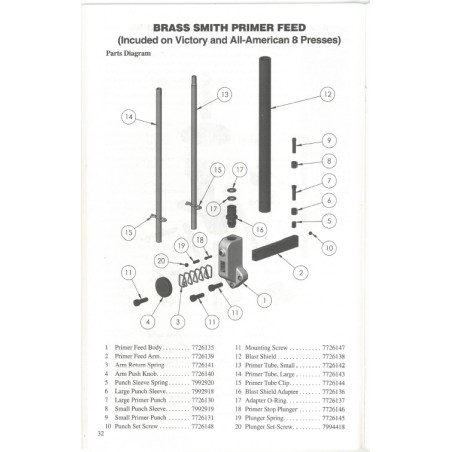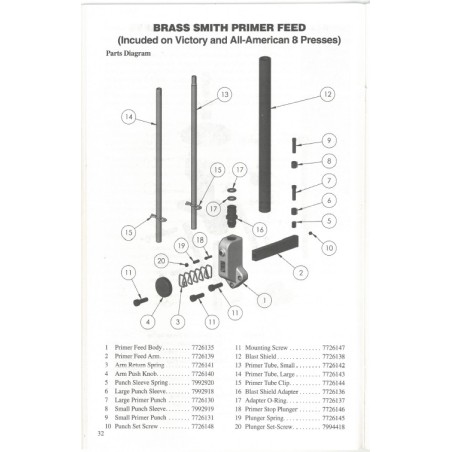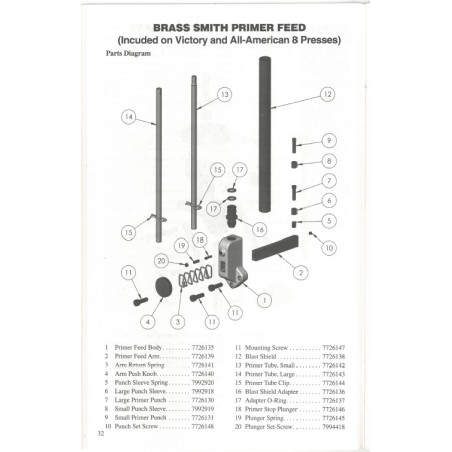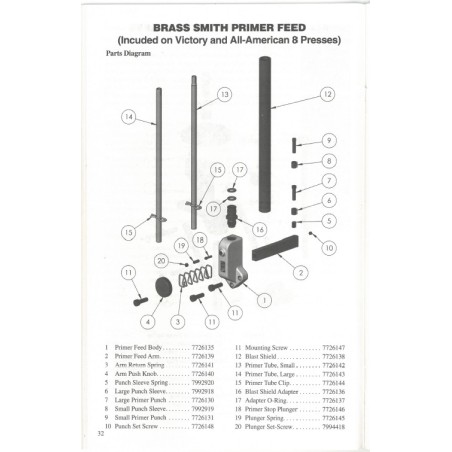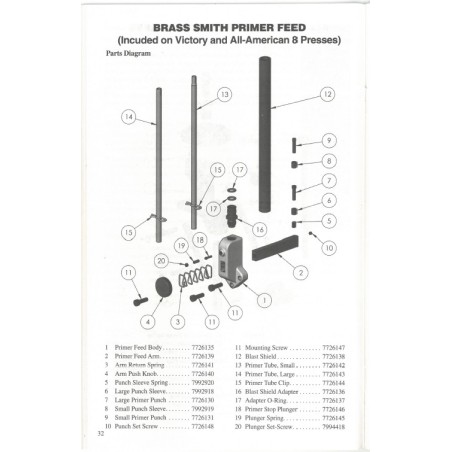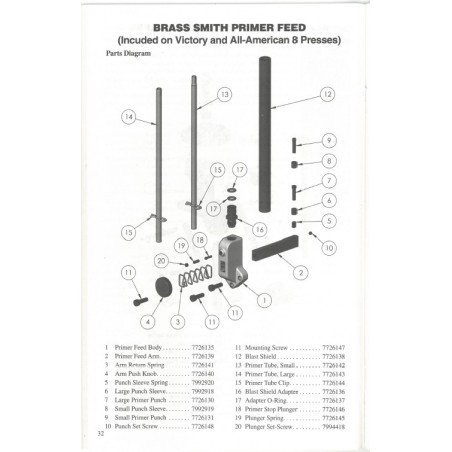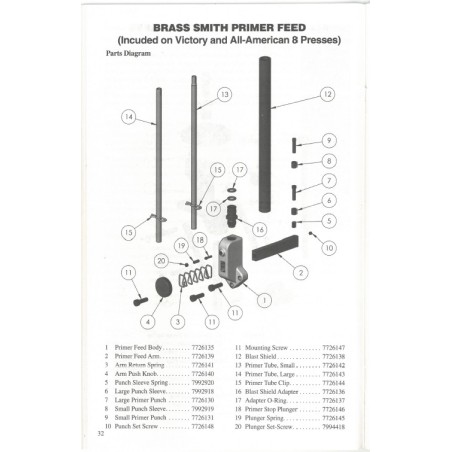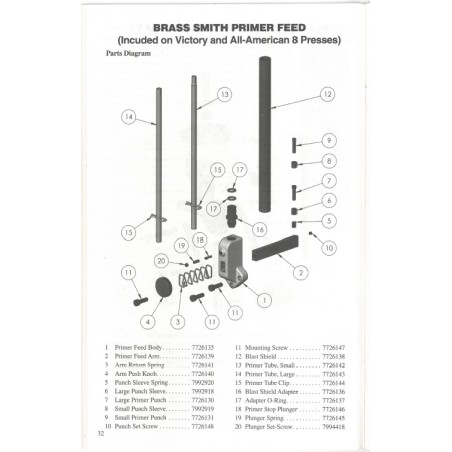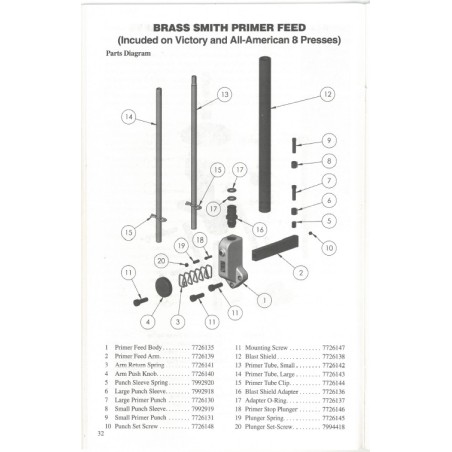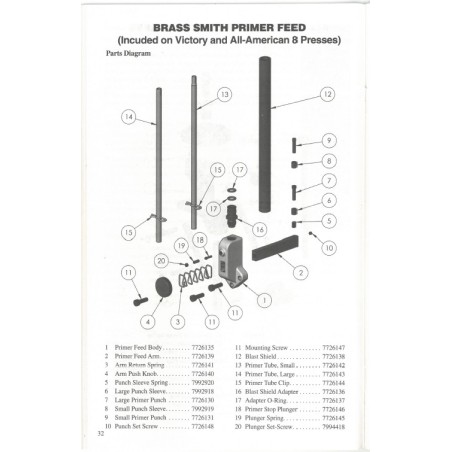
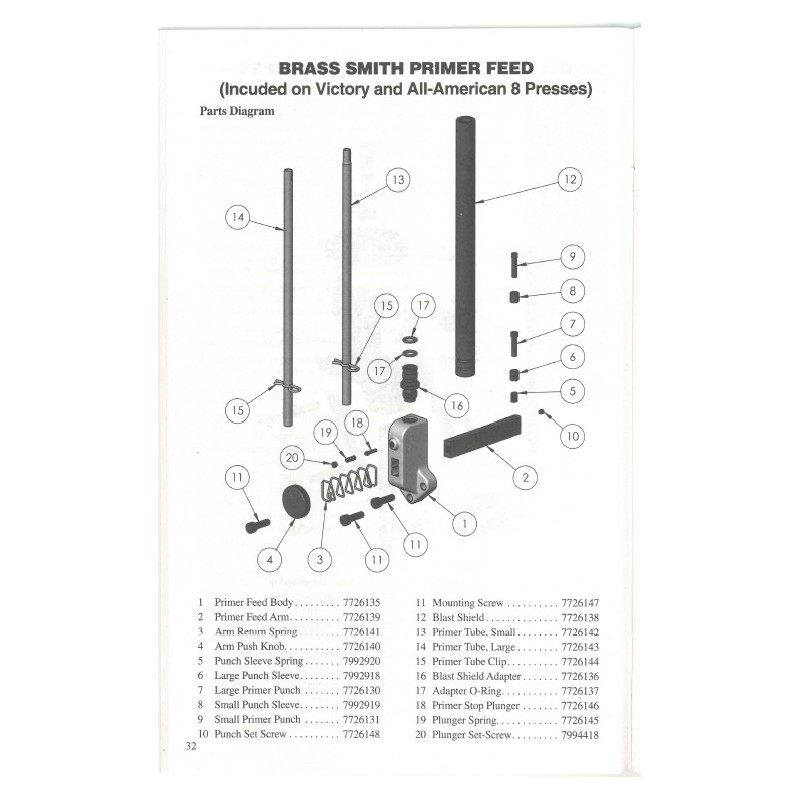
The replacement arm return spring for the Brass Smith Primer Feed is a small but vital component that restores the arm to its home position after each feeding cycle. By ensuring consistent return action, the spring helps prevent misfeeds, jams, and inconsistent placement of primers. In reloading workflows where repeatability matters, a functioning return spring supports both safety and throughput, making it a key part to inspect during maintenance routines.
Compatibility is the primary concern when choosing a replacement spring. The new spring should match the original in anchor geometry and relaxed length to fit the feed arm without forcing other parts. From hands-on experience in reloading setups, replacing a worn-out spring with a correctly specified unit noticeably improves cycle consistency and reduces the incidence of misaligned primers. Experience shows that small differences in spring stiffness or length can produce measurable changes in feed reliability, so selecting a component that mirrors the original intent is essential.
Visual inspection before installation is recommended: check for corrosion, permanent deformation, or surface wear. These signs indicate fatigue and the need for replacement. Practical experience also indicates that maintaining a clean pivot area and verifying the arm's alignment improves the effectiveness of a new spring.
User experience matters during installation: proper alignment and correct seating of the spring prevent premature wear. Experienced shops recommend performing a short burst of test cyclestypically 50 to 100after replacement to confirm stability. If you notice odd noises, slack, or partial returns, re-check the anchors and pivot conditions. Often cleaning contact points and light lubrication of pivots will restore smooth action without further adjustments.
Avoid permanent modifications to the spring or anchor geometry. If adjustments seem necessary, review compatibility and obtain the correct replacement rather than altering the existing spring, which may degrade performance and safety.
Operational experience highlights the value of preventive actions. Keeping a spare spring in inventory and logging cycle counts since the last replacement helps avoid unplanned downtime. Experienced technicians also use a combination of visual checks and short functional tests to catch wear early.
Common questions: How do I know the spring is the problem? If the arm fails to return fully or the feed cycle is inconsistent, the spring is among the first items to inspect. Can spring tension be adjusted? It is safer to replace the spring with the correct specification than to bend or alter it. Should I lubricate the spring? Light lubrication of pivot points can help, but avoid heavy greases that trap dust and debris.