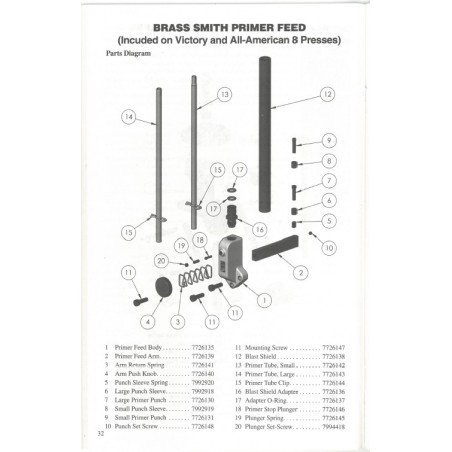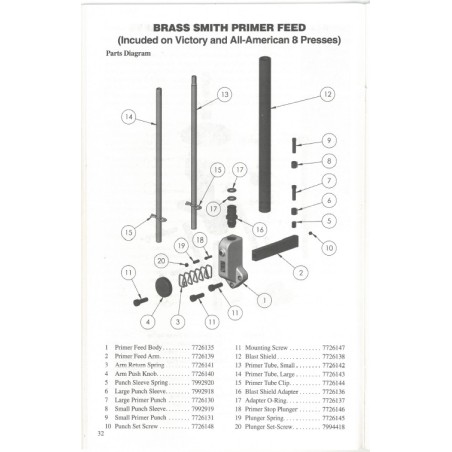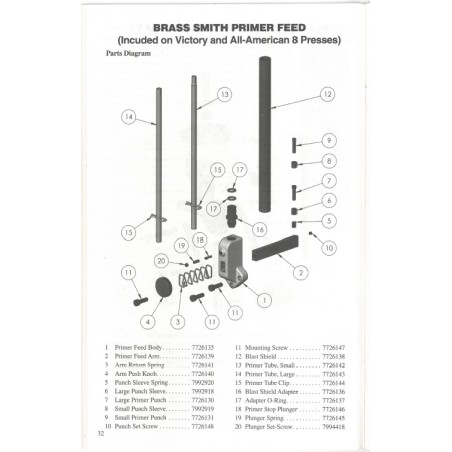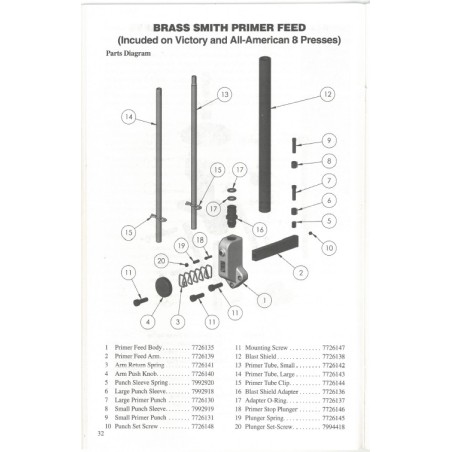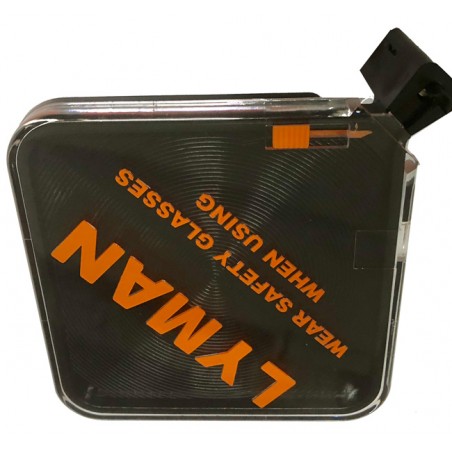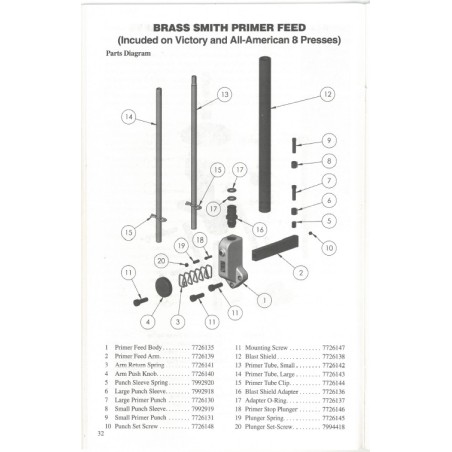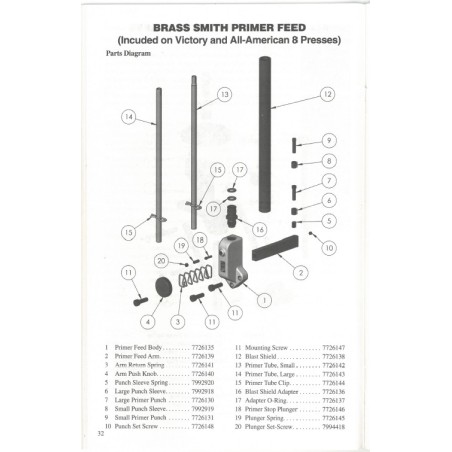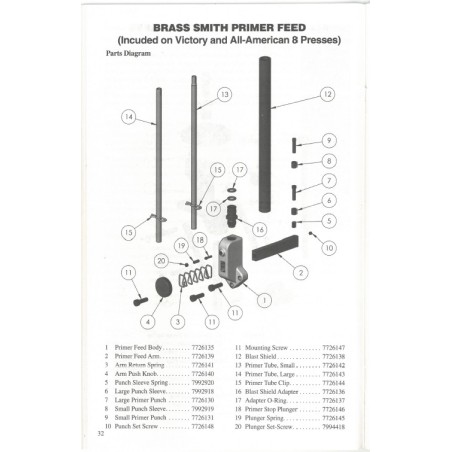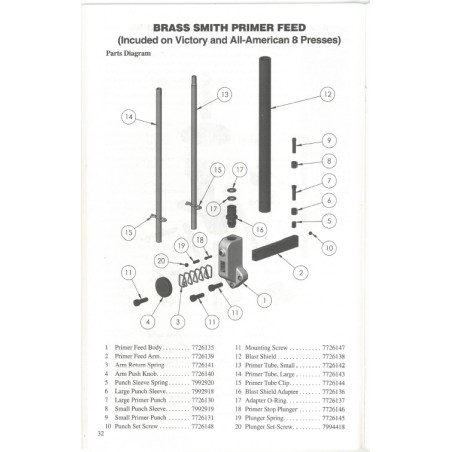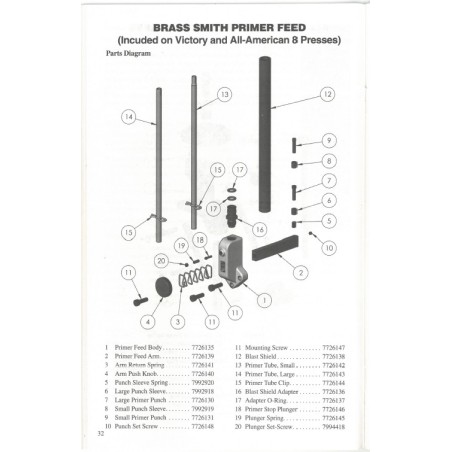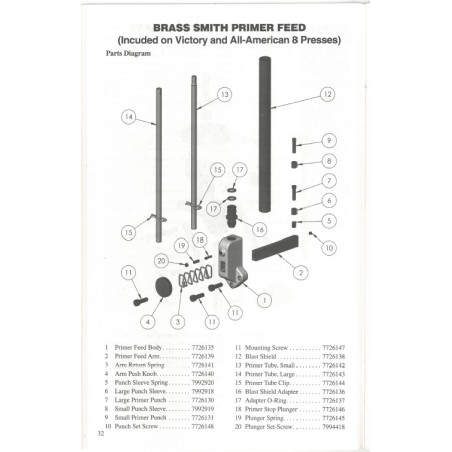
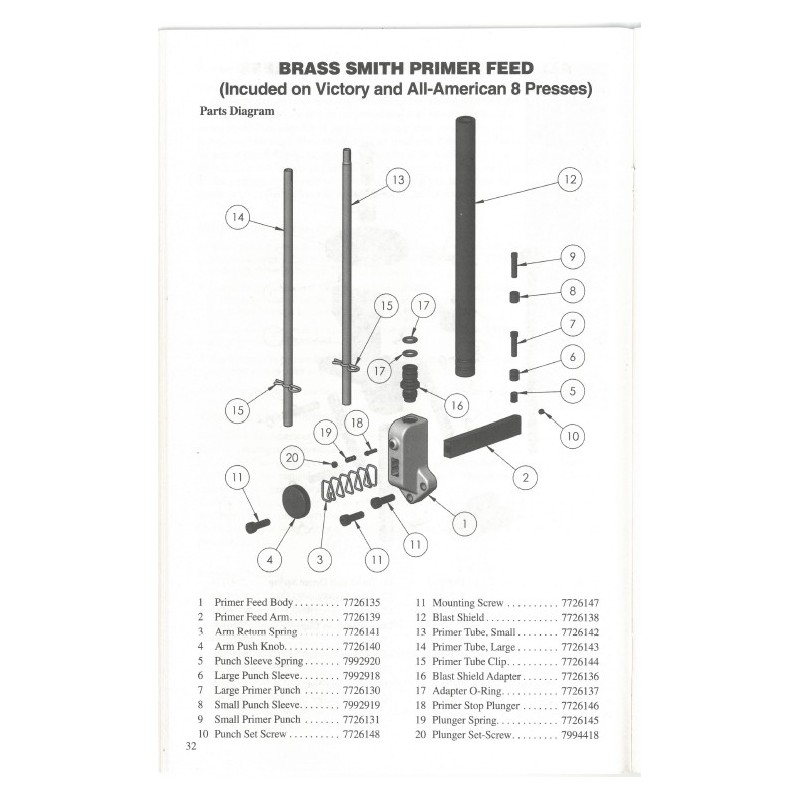
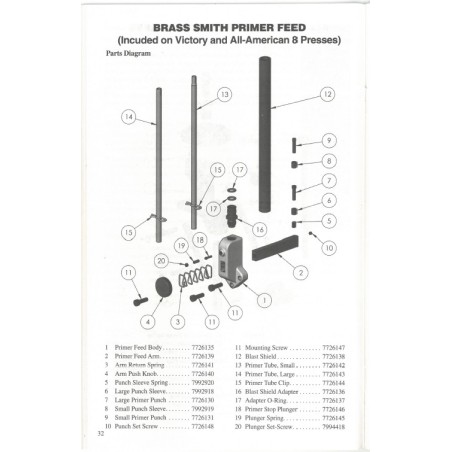
The Replacement Primer Stop Plunger for Brass Smith Primer Feed is a spare part designed to restore accurate primer feeding in Brass Smith reloading presses. It replaces worn or damaged plungers that cause misfeeds, inconsistent seating, or jams.
This component acts as a positioning and retention element within the primer feed channel, ensuring each primer is delivered correctly to the primer holder. It is manufactured with tight tolerances and materials that withstand friction and repeated cycles.
Before purchasing, confirm compatibility with your Brass Smith model and the specific primer feed system you use. Many models share similar dimensions, but small differences in length or diameter can affect fit. For universal feeds, compare the plunger's measured dimensions to ensure correct engagement.
The part's functionality is straightforward: a plunger that stops and regulates the feed action. Its geometry defines how a primer sits and how reliably it releases toward the primer pocket.
Material choicehardened steel, stainless steel, or high-performance polymers in some replacementsaffects durability and maintenance needs. Opting for treated finishes helps reduce adhesion of fouling.
Dimensional consistency is essential. A replacement with deviations may cause intermittent failures or damage primers. Purchasing from reputable makers or sellers with clear specifications preserves performance and safety.
To ensure compatibility, measure the diameter and length of the original plunger and compare with replacement specs. Even a millimeter off can be critical in primer feed systems.
Check the tip profile: some plungers are rounded, some flat, others chamfered. That detail determines how the primer seats and releases; a mismatched profile can lead to double feeds or failures to seat.
If you lack the original part for physical comparison, reference your feeder model number or manufacturer code. When that's unavailable, providing simple measurements (outer diameter, overall length, stem diameter) to the supplier is usually enough to confirm fit.
Keep spare plungers if you reload frequently. Having a backup prevents downtime and allows immediate comparison between the old and new parts.
Carefully remove the worn part following the press manufacturer's procedure. Many feeders require releasing a retaining clip or unscrewing a retention element to extract the plunger.
Clean the feed channel before installing the new plunger to remove metal dust and fouling. A clean path ensures precise fit and reduces the chance of jams.
Insert the replacement plunger and seat it to the recommended stop point in the manual. Verify smooth movement and ensure there is no excessive play at the stop.
Run a small batch of primers to test feed, seating, and release. Adjust feed tension or position as required by the feeder design until consistent feeding is achieved.
Periodically clean the channel and plunger to remove residue buildup. Accumulated debris increases friction and degrades reliability.
Avoid heavy greases on surfaces where primers slide; use manufacturer-recommended lubricants sparingly or dry-film alternatives that do not attract dust.
Inspect the plunger visually for wear, nicks, or deformation. Replace at the first sign of tolerance loss to preserve consistent reloading performance.
If you perform high-volume reloading, schedule replacements based on usage. Tracking spare parts prevents unexpected interruptions.
Frequent jams: typically caused by channel contamination, plunger deformation, or malformed primers. Clean and inspect the plunger and discard defective primers.
Double feeds: often due to incorrect plunger length or tip profile that allows two primers to align; verify dimensions and switch to a compatible replacement.
Primers not seating: indicates a worn or mismatched plunger tip. Replace to restore precision and avoid misfires.
Excess friction or noise: check surface finish and burrs; a better-finished replacement or light finishing may remedy the issue.
Choose replacements with clear specifications and listed tolerances. Descriptions that include measurements (diameter, length, tip profile) make selection straightforward.
Prefer manufacturers or retailers with return policies in case of incompatibility. Avoid parts sold without fit guarantees or technical details.
Consider purchasing a small spare kitoften more economical and reduces downtime for active reloaders.
If uncertain about materials, select corrosion-resistant or stainless versions for humid environments or corrosive exposures.
Fitting the right Replacement Primer Stop Plunger for Brass Smith Primer Feed restores reliable primer delivery and minimizes reloading errors. Proper selection, installation, and upkeep deliver consistent, safe performance.