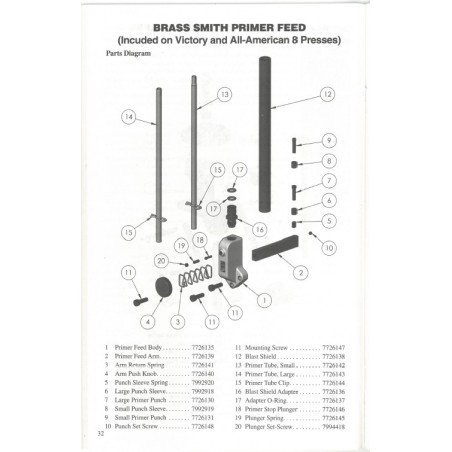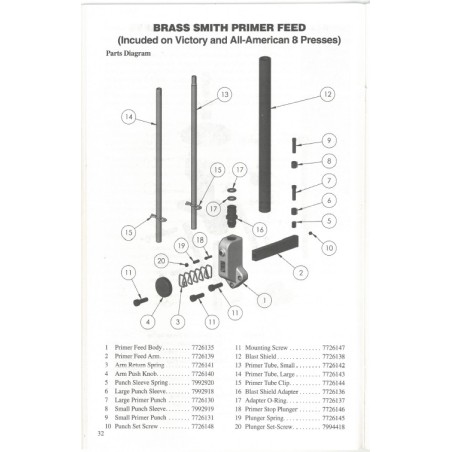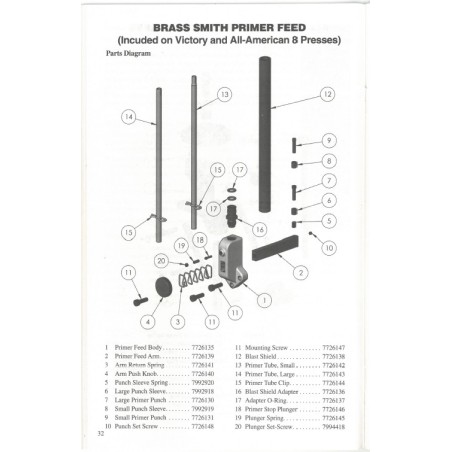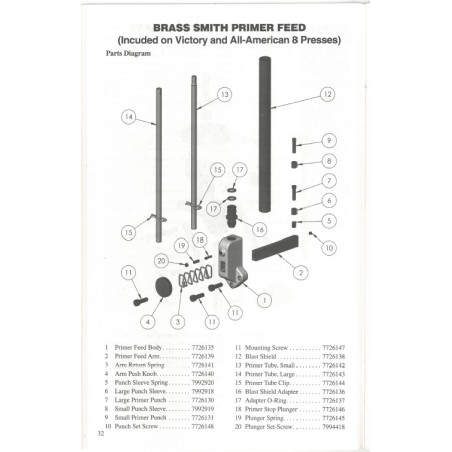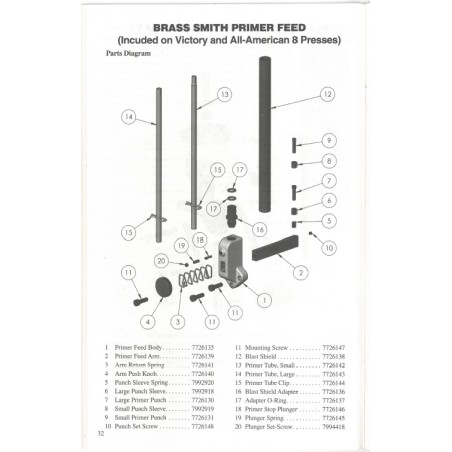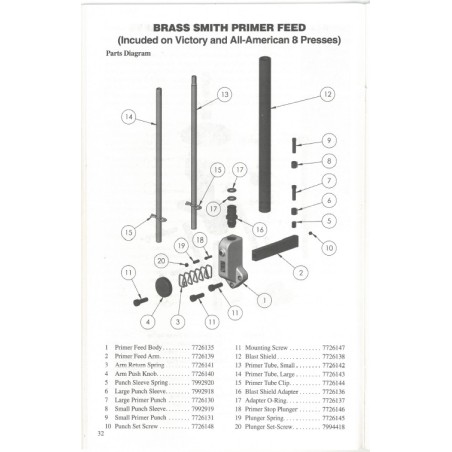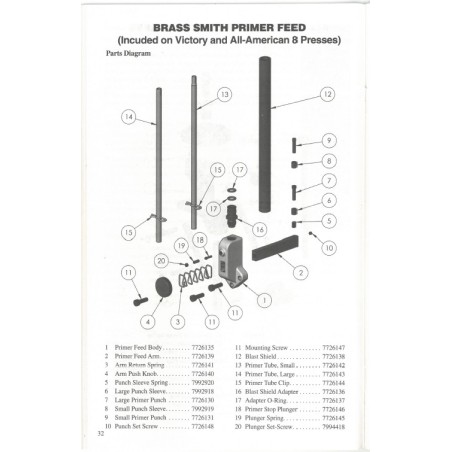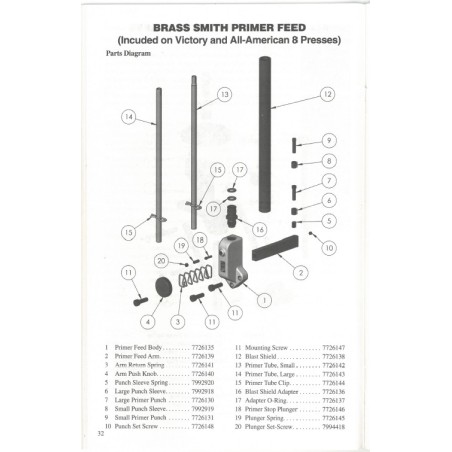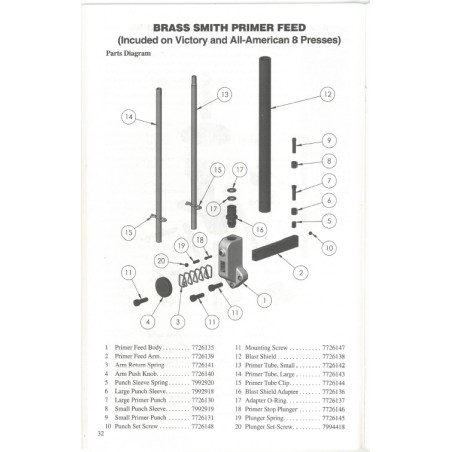
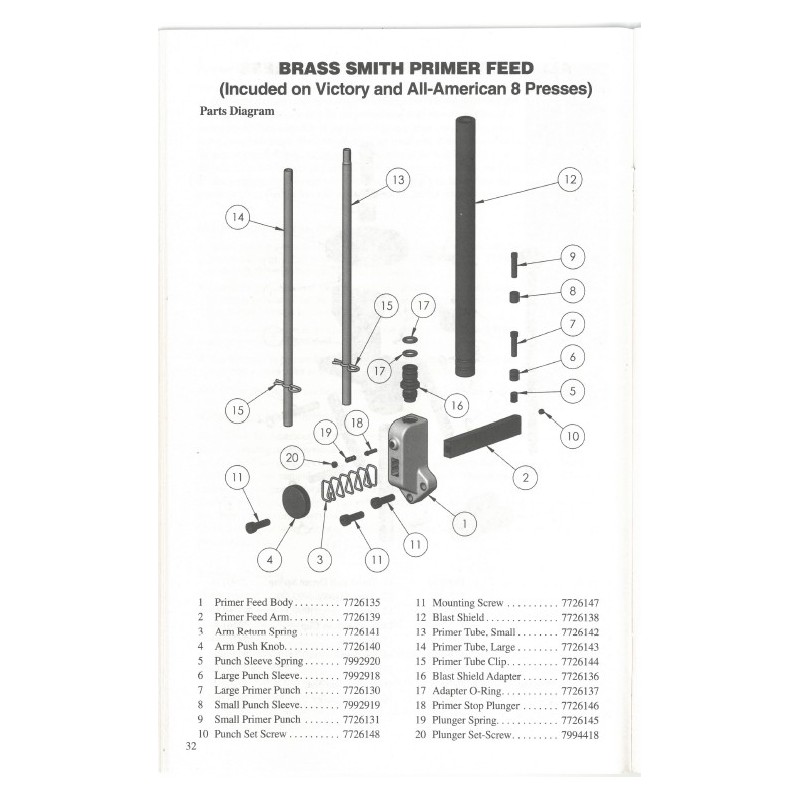
The replacement plunger spring for the Brass Smith primer feed is a wear item engineered to restore consistent plunger pressure and travel. It's intended as a cost-effective swap to return reliable primer feeding in compatible presses and feeders without replacing the entire assembly.
This spring is designed to apply steady force to the plunger so primers feed smoothly through repeated cycles. For most Brass Smith-compatible models, the spring preserves the plunger's resting position and prevents variations that can cause double feeds or jams.
Typical materials include heat-treated spring steel rated for compression fatigue. While exact dimensions differ by model, the spring's design priorities are resistance to set, fast recovery between compressions and stable behavior under normal workshop temperatures.
Before purchasing, confirm compatibility with your specific feeder model by checking the plunger bore diameter and housing length. A correctly sized spring ensures correct preload and avoids assembly problems during installation.
Installing the replacement plunger spring is straightforward when basic safety steps are followed: disconnect power to the press, clear primers from the feeder, and work on a stable surface with appropriate tools. Keep small parts secured in a tray to prevent loss.
Check the plunger for smooth travel without side binding after reassembly. Perform a manual feed test of 2030 cycles to confirm consistent operation before reintroducing primers. Workshop experience shows this simple test catches alignment or tension issues early.
If resistance or misfit occurs at any step, stop and verify component order; forcing parts can cause misalignment and accelerate wear on the new spring.
Routine maintenance extends spring life and keeps primer feeding consistent. Clean the feeder's interior periodically to remove dust, metal shavings and old lubricant residues that impede movement.
Common symptoms of spring-related issues include inconsistent feeding, primers not seating fully, or double feeds. A weakened spring often causes incomplete advancement. Practical bench experience indicates replacing the spring resolves most such problems when other parts remain serviceable.
Maintenance tips:
If problems persist after replacing the spring, inspect feeder alignment with the press and the condition of hoppers or feed plates. Electrical or mechanical timing faults in the press can mimic spring or feeder malfunctions.
When purchasing a replacement spring, choose parts specified for Brass Smith feeders or exact-fit equivalents. Generic springs may fit but differences in tolerance and hardness affect long-term performance. Quality replacements reduce downtime and frequent servicing.
Check seller return policies and warranties to allow exchange if the part does not fit. Workshop experience suggests keeping a spare spring on hand for high-use setups to avoid production interruptions.
Keep maintenance records noting replacement dates and approximate cycle counts to plan future purchases and ensure reliable feeder operation across multiple machines.